Centre for Independent Studies
Let’s share good ideas. 💡 The Centre for Independent Studies promotes free choice and individual liberty and the open exchange of ideas. CIS encourages debate among leading academics, politicians, media and the public. We aim to make sure good policy ideas are heard and seriously considered so that Australia can prosper.
Listen on:





Episodes

Monday May 25, 2020
Monday May 25, 2020
At a time when tensions are running high, CIS Executive Director Tom Switzer asked Has China Won? Our debate between John Mearsheimer and Kishore Mahbubani, two of the world’s leading foreign policy intellectuals. Covid-19 has greatly raised tensions between China and the West. Washington and its allies express outrage at the Communist regime’s opacity concerning the outbreak of the coronavirus. Meanwhile, fears are growing that a pandemic that began in the Chinese city of Wuhan may end by increasing Beijing’s international influence and power.
Kishore Mahbubani is author of Has China Won? The Chinese Challenge to American Primacy (just out, PublicAffairs) A former Singaporean ambassador to the United Nations (twice), he was the founding dean of the Lee Kuan Yew School of Public Policy. He was a guest of CIS in September 2018.
John Mearsheimer is author of The Great Delusion: Liberal Dreams and International Realities (Yale University Press, 2019) and The Tragedy of Great Power Politics (Norton, 2014.) He is professor of Political Science at the University of Chicago. He was a guest of CIS in August 2019.
____________________
The Centre for Independent Studies (CIS) promotes free choice and individual liberty, and defends cultural freedom and the open exchange of ideas. CIS encourages debate among leading academics, politicians, media and the public. We aim to make sure good policy ideas are heard and seriously considered so that Australia can continue to prosper into the future.
Check out the CIS at - https://www.cis.org.au/
Subscribe to CIS mailing list- https://www.cis.org.au/subscribe/
Support us with a tax-deductible donation at - https://www.cis.org.au/support/
Join the CIS as a member at - https://www.cis.org.au/join-cis/
Follow CIS on Socials
Twitter - https://twitter.com/CISOZ
Facebook - https://www.facebook.com/CentreIndependentStudies/
Linkedin - https://www.linkedin.com/company/the-centre-for-independent-studies/?viewAsMember=true
Monday May 25, 2020
Monday May 25, 2020
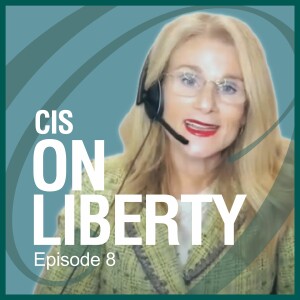
On the show this week, Salvatore Babones was joined by April Palmerlee, CEO of the AmCham, the American Chamber of Commerce in Australia. AmCham includes around 500 company members representing hundreds of thousands of employees operating throughout Australia.
The United States is the biggest investor in Australia, full stop. No one else comes close, not even China. More than 100,000 people in Australia today were born in the United States, with many more claiming American citizenship by descent. American companies employ 420,000 people in Australia on a median salary of $115,000 per year. They spend a billion dollars a year locally on research and development.
April talked to us about the many roles played by American companies in Australia and the importance of the US-Australian relationship for both countries.
Wednesday May 13, 2020
Wednesday May 13, 2020
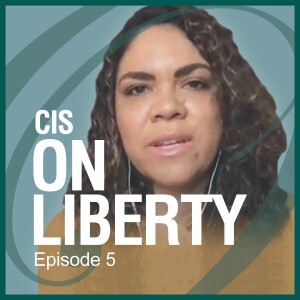
Salvatore Babones speaks with Jacinta Price, Director of the Indigenous Program at the Centre for Independent Studies. Jacinta joins us live from Alice Springs, where she serves as a Town Councillor, to discuss how lockdown compares in remote communities.
They discussed what 'social distancing' means in the wide-open spaces of remote Australia, where local quarantines and 'biosecurity zones' are a way of life. Jacinta will explain the government's efforts to keep the coronavirus out of remote settlements with rudimentary medical facilities, and how the pandemic has affected the daily lives of people living in some of Australia's most challenging environments.
Are aboriginal communities complying with restrictions? How do we get the indigenous economy moving again after such a set back?
Wednesday May 13, 2020
Wednesday May 13, 2020
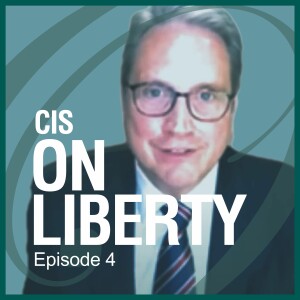
Our weekly live-stream hosted by Salvatore Babones, featuring discussions on how Australian society has been impacted by Covid-19. For your chance to question CIS researchers and other guests join us live on YouTube and Facebook each week.
On the show this week, Salvatore Babones speaks with James McBrayer, CEO of the listed medical technology company Cyclopharm and CIS Member. James's company is rare in that it still manufactures here in Australia. The local production line manufactures and distributes the components to several of its products including Technegas, a radio-pharmaceutical used in lung ventilation imaging.
We'll be asking James about how his company's products may help fight the coronavirus, the regulatory complexities in operating across jurisdictions and the impact of the variations among healthcare systems. James and Salvatore will also address the current challenges posed for medical supply chains with increased demand across the sector.
Watch to find out what it is like to run a multinational pharmaceutical company in the face of such global uncertainty
Wednesday May 13, 2020
Wednesday May 13, 2020
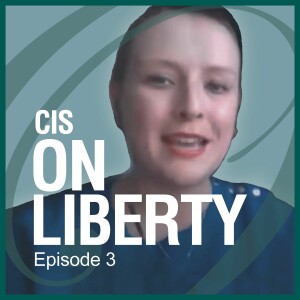
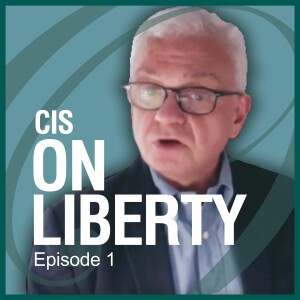
On the show this week, Salvatore Babones speaks with CIS Policy Analyst Monica Wilkie. Monica writes on free speech, freedom of religion and identity politics. She is passionate about defending the principles of individual liberty and small government to ensure all Australians can live their lives as they see fit.
This pandemic has forced the majority of our society into self isolation, and we are now working and 'socialising' from home at an unprecedented level. Technological advancements such as teleconferencing have been praised for helping keep us all connected during this lock down. But is it possible to substitute face-to-face interaction? And are there long-term implications of depriving people of our fundamental need to socialise - in person?
Wednesday May 13, 2020
Wednesday May 13, 2020
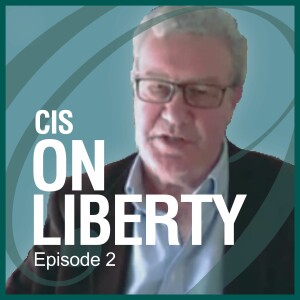
On the show this week, Salvatore Babones spoke with Alexander Downer, Australia's longest-serving foreign minister and chairman of The UK Policy Exchange In London, about how to "manage the aftermath" of the coronavirus pandemic.
Writing in the Australian Financial Review, Alexander Downer recently argued "The federal government now has to start thinking about its exit plan and sell this through the national cabinet to the states. It has to develop acceptable criteria for winding back social isolation and, at some point, end the substantial subsidies to business and the offer of free childcare."
Wednesday May 13, 2020
Wednesday May 13, 2020
Host Salvatore Babones spoke with Peter Kurti, who directs the Culture, Prosperity & Civil Society program at the Centre for Independent Studies (CIS). Peter discussed the morality of Australia’s response to coronavirus pandemic: hoarding, profiteering, and toilet paper. Beginning the series with a discussion and Q&A session, we’ll look at the community and societal responses to the crisis.
"In the rush to save ourselves [from COVID-19], we are in danger of losing sight of the needs of our neighbours, many of whom are more vulnerable and less able to fend for themselves."
Peter Kurti
In his CIS Ideas article, he went on to suggest that:
Whilst not being complacent about the virus, and being sure to observe public health guidelines, we also need to check the fear that arises from speculation and rumour. We need to cultivate the capacity to live calmly in the face of what we do not know. It’s one of our national traits that makes Australia the envy of so many other countries. Admired for our egalitarian spirit of optimism and a reluctance to take ourselves too seriously, now is the time – like no other – for us to hold fast to our sense of mateship.
Read Peter's CIS Ideas article at - https://www.cis.org.au/commentary/articles/taking-toll-on-society/
See who the CIS are at - https://www.cis.org.au/
Support the CIS with a donation at - https://www.cis.org.au/donate/
Join the CIS as a member at - https://www.cis.org.au/join-cis/
YouTube -
Twitter - twitter.com/cisoz
Facebook - facebook.com/CentreIndependentStudies/
Linkedin - au.linkedin.com/company/the-centre-for-independent-studies
Saturday May 09, 2020
Saturday May 09, 2020
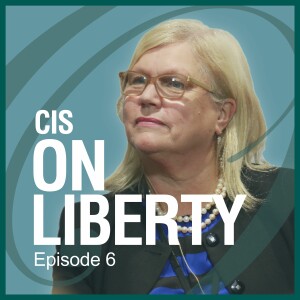
On the show this week, Salvatore Babones speaks with Judith Sloan, contributing economics editor at The Australian. They'll focus on repairing the economic damage that has been done and what strategic economic policies should be pursued by the government.
Could we have had lower economic costs and still managed the virus well? Does the situation in other countries attest to the health and economic damage wrought if the virus is not well managed? How do we spur a revival of manufacturing to offset disrupted supply chains and ensure security and prosperity?
On Liberty is our weekly live-stream hosted by Salvatore Babones. The show focuses on wide-ranging discussion with the great and the good on how Covid-19 affects Australian society. Please join our CIS researchers and other guests live on YouTube and Facebook each week, or watch past episodes here.
Check out the CIS at - https://www.cis.org.au/
Support us with a tax-deductible donation at - https://www.cis.org.au/donate/
Join the CIS as a member at - https://www.cis.org.au/join-cis/
Twitter - twitter.com/cisoz
Facebook - facebook.com/CentreIndependentStudies/
Linkedin - au.linkedin.com/company/the-centre-for-independent-studies
Tune in live On Liberty, every Thursday at 10am.
Wednesday Feb 26, 2020
Wednesday Feb 26, 2020
For the past seventy or so years, the United States of America has been the bastion of freedom and democracy, shining the light of its noble ideals around the world and championing those ideals whenever they came under threat. Since the end of the Cold War, American political leaders and policymakers have unashamedly championed U.S. global leadership – from Asia and Europe to the Persian Gulf. However, a few libertarians and classical liberals warned an ambitious foreign policy inspired by vision and sense of mission was fraught with the danger of unintended consequences. It would also represent the kind of foreign policy that has been instrumental in building up the power of states throughout history.
CIS’s scholar in residence for 2020, Doug Bandow, is one of those critics — opposing various U.S. ventures, most notably the US-led wars on terror after September 11, 2001. But the circumstances are changing. In the Trump and Bernie Sanders era, calls for abandoning America’s ambitions of global pre-eminence are growing. If these views prevail, what are the consequences for long-standing U.S. treaty allies, such as Australia?
Doug Bandow is CIS scholar in residence in 2020, a senior fellow at the Cato Institute in Washington and a former special assistant to president Ronald Reagan.
Thursday Feb 20, 2020
Thursday Feb 20, 2020
Australia isn’t the only country exposed to a novel coronavirus recession in China. The COVID-19 epidemic is first and foremost a human tragedy, but it also has raised fears about the performance of the Chinese economy and everyone who supplies it. According to some scholars, such as Minxin Pei, the outbreak of the new and deadly epidemic is exposing the vulnerabilities of China’s top-down regime. He calls it a disease of Chinese autocracy. Coronavirus, the argument goes, highlights the already low levels of trust in party-state media reporting.
Others disagree, arguing that Beijing has handled the crisis better than anyone had expected compared with two decades ago. After all, Beijing has been more transparent than it was with the SARS epidemic of 2002-03. And in response to the crisis, the regime has locked down cities, cut transport links and is rapidly building new hospitals and medical facilities.
But what happens if the virus can’t be suppressed? How significant will the economic loss and severe travel restrictions be for China? Has coronavirus changed the political calculus on Australia-China relations? Or are these concerns overblown?
Speakers; Doug Bandow is CIS scholar in residence in 2020, a senior fellow at the Cato Institute in Washington and a former special assistant to president Ronald Reagan. Natasha Kassam is research fellow in the diplomacy and public opinion program at the Lowy Institute. Sue Windybank is the director of the CIS project on China and free societies. Vicky Xu is a journalist, a comedian and a researcher for the Australian Strategic Policy Institute’s Cyber Policy Centre. Salvatore Babones is an adjunct scholar at CIS and professor of sociology at the University of Sydney.
________________________
Check out the CIS at - https://www.cis.org.au/
Subscribe to our mailing list - https://www.cis.org.au/subscribe/
Support us with a tax-deductible donation at - https://www.cis.org.au/donate/
Join the CIS as a member at - https://www.cis.org.au/join-cis/
YouTube - youtube.com/user/CISAus/
Twitter - twitter.com/cisoz/
Facebook - facebook.com/CentreIndependentStudies/
Linkedin - au.linkedin.com/company/the-centre-for-independent-studies
Centre for Independent Studies
Let’s share good ideas. 💡
The Centre for Independent Studies promotes free choice and individual liberty and the open exchange of ideas. CIS encourages debate among leading academics, politicians, media and the public. We aim to make sure good policy ideas are heard and seriously considered so that Australia can prosper.